


A Beginner’s Guide To DIY Electric Guitar Kit Building
Have you ever thought about putting together your own electric guitar or bass? A DIY kit might be just what you’re looking for. These kits come with all the pieces you need to create a fully functional instrument, including the body, neck, hardware, pickups, and electronics. It’s kind of like a musical puzzle, where each part has its own place and purpose.
Building your own guitar isn’t just about ending up with a cool instrument. It’s a pretty rewarding journey that combines a bit of engineering with creativity. You learn how a guitar works mechanically and electrically, and best of all, when you’re done, you get to play a guitar you built yourself. There’s a real sense of accomplishment in holding and playing something you’ve pieced together, like getting to know your guitar inside out.
This guide is perfect for beginners. If you are new to guitar building or even the idea of working with tools and electronics, you are in the right place. It’s for hobbyists too, especially those with no prior experience. I’ll walk you through the basics at a steady pace, making sure you’re comfortable with each step before moving to the next.
We’ll cover essential skills like using basic tools, understanding guitar components, and the assembly process. You will learn enough about fretboards, pickups, and even a bit of the science behind sound to start crafting your own riffs and melodies in no time. Whether it’s building a guitar or a bass, This guide will help you turn a box of parts into an awesome instrument.
Selecting the Right Guitar Kit for Your Needs
Choosing the right guitar kit sets the tone for your entire DIY project. Knowing what to expect when you first open that box can make the process less daunting. Most kits come with the essentials: a pre-cut body, a neck, hardware like bridges and tuners, pickups, and electrical components like pots and jacks. Just think of it as a starting point for your musical masterpiece.
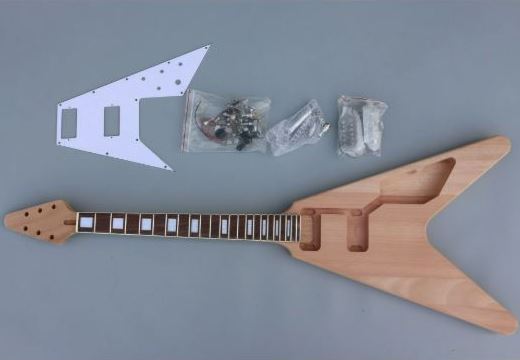
When deciding between an electric guitar kit and a bass kit, it’s important to remember their fundamental differences. Are you a guitar player? A bass player? Maybe you play one and would like to try the other? Guitars are typically smaller, and can have unique pickup configurations that cater to their sound. On the other hand, bass kits have a longer scale length, and most of them are a little more simple with the wiring. Understanding these nuances can help you choose the kit that best matches the sound you’re aiming for.
One of the first decisions is to determine how much assembly you want to do. Partially assembled kits, such as those pre-painted bodies or with pre-wired pickguards or wiring harnesses, might sound easier but can limit your customization options. They’re very good if you’re just starting and want a straightforward build. Other more unfinished kits might require a little greater effort and skill, and allow for more personalization because you get to configure critical elements that have a noticeable impact on the instrument’s playability and tone.
Quality is another consideration. While entry-level kits are wallet-friendly, they may require a few tweaks to get things just right. Higher end kits, on the other hand, might offer better materials and components, leading to a more satisfying sound and build experience. They’re worth exploring if you want your first project to result in something closer to a fully professional instrument.
Finally, the style of the kit is crucial – not just visually, but in terms of sound. Whether you’re drawn to the classic rock vibe of a Les Paul, the sleek design of a Stratocaster, or you’re a fan of the deep grooves of a Jazz Bass, there’s something for every stylistic taste. Matching your kit style with your musical preference will make your finished instrument more enjoyable both visually and acoustically.